

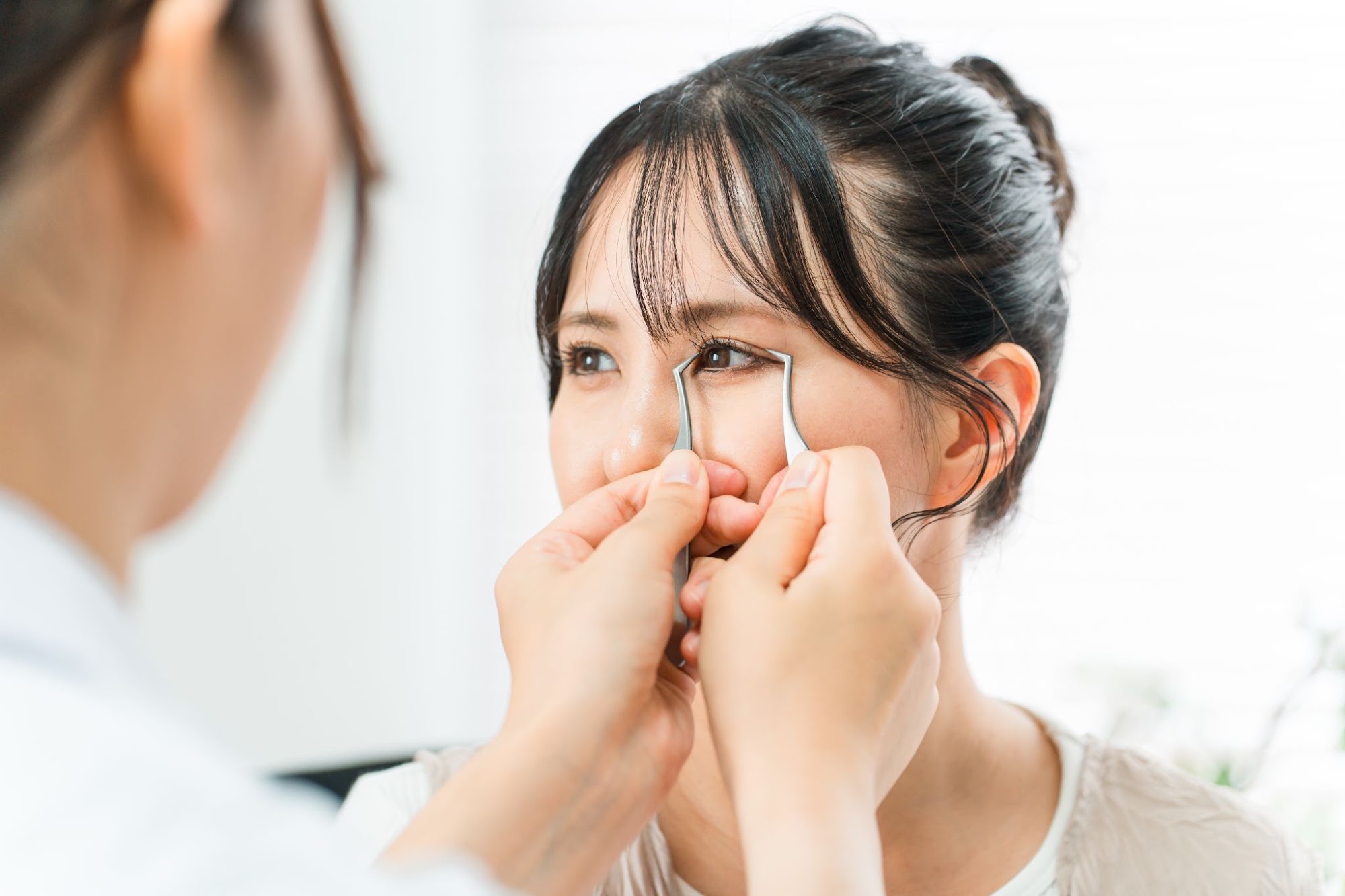
Blepharoplasty, the surgical term for eyelid surgery, corrects hooded eyes and under-eye bags that can make you look tired or older. It can also be necessary if upper eyelid skin hangs low enough to cause vision problems.
Because eyelid surgery can be cosmetic, medically necessary, or both, people often have specific questions about how the surgery is performed in each scenario and out-of-pocket costs.
In this guide, the surgical team at The Lett Center answers common questions people have about eyelid surgery and explains:
- The cosmetic and functional benefits of eyelid surgery
- If blepharoplasty is performed differently for cosmetic versus functional reasons
- Who is a good candidate for eyelid surgery
- When eyelid drooping may not be correctable with blepharoplasty alone
- Whether insurance covers an eye lift procedure
Cosmetic vs. Functional Eyelid Surgery at a Glance
| Cosmetic Blepharoplasty | Functional Blepharoplasty | |
|---|---|---|
| Why It’s Performed | To improve the appearance of the eyelids | To improve vision or function affected by the upper eyelids |
| Common Concerns | Hooded upper lids, under-eye bags, puffiness, excess skin | Upper eyelid skin blocking part of the visual field, brow strain, compensatory head positioning |
| Part of the Eye Treated | Upper eyelids, lower eyelids, or both | Typically only the upper eyelids |
| Insurance Coverage | Typically not covered | May be covered when medical necessity criteria are met |
The Cosmetic Benefits of Eyelid Surgery
Cosmetic blepharoplasty is performed to improve changes around the upper or lower eyelids caused by aging, genetics, or both. The aesthetic benefit depends on whether an upper or lower blepharoplasty is performed.
Upper Eyelid Surgery for a More Rested, Alert Appearance
With age, the skin around the eyes loses elasticity, which can cause hooding or heaviness across the upper eyelids. This can make you look older or appear tired, even when you are well-rested.
An upper blepharoplasty removes excess skin and addresses underlying tissue when needed, creating a more open, refreshed appearance. It can also reduce some visible age-related changes around the eyes without altering the rest of the face.
The goal is a noticeable but natural-looking improvement with eyes that appear more defined and refreshed.
Lower Eyelid Surgery to Reduce Under-Eye Bags and Puffiness
Lower eyelid surgery can address persistent under-eye bags caused by protruding or displaced fat and loose skin that do not disappear with sleep or skincare. Depending on the cause, a surgeon may remove or reposition fat and address excess skin in the lower eyelid.
The result is a smoother, less puffy under-eye area that can make the eyes look more rested and youthful. However, the surgery cannot correct every type of dark circle, since pigmentation, volume loss, and shadows can also contribute.
The Functional Benefits of Eyelid Surgery
If excess upper eyelid skin hangs low enough to interfere with your vision, it becomes a functional issue. In these cases, removing the excess skin offers benefits beyond aesthetics, such as improved vision and reduced issues caused by compensatory movements.
Improved Peripheral Vision
When excess upper eyelid skin hangs low enough, it can block part of your upper and peripheral vision. Because this usually happens gradually, many people adapt without realizing how much their field of vision has narrowed.
For patients whose vision is affected, removing that excess skin can make a measurable difference. In one study, 90.9% of patients showed improvement on visual field testing after blepharoplasty, and 80.6% had an increase in visual field height.
Relief From Eye Strain and Head-Tilting
When heavy upper eyelids interfere with your vision, you may compensate by raising your eyebrows or tilting your head back to see more clearly. Over time, this extra effort can cause brow fatigue, headaches, and neck strain.
Correcting the obstruction with eyelid surgery can reduce the need for these compensatory habits. The degree of improvement varies from person to person, but research on functional upper eyelid surgery has also found improvements in headaches and quality of life after surgery.
Is Cosmetic Eyelid Surgery Performed Differently From Medically Necessary Blepharoplasty?
Cosmetic and medically necessary blepharoplasty generally use the same surgical techniques. The difference lies in the concern being treated and the amount of tissue addressed.
For upper blepharoplasty, an incision is typically made within the natural eyelid crease to remove excess skin and, when needed, fat or muscle. Lower blepharoplasty uses an incision below the lash line or inside the lower eyelid to remove or reposition fat and address excess skin.
Lower blepharoplasty is usually cosmetic but may be medically necessary in some functional or reconstructive cases. If drooping is caused by ptosis rather than excess skin, a different surgical approach may be needed to correct the eyelid position.
Who Is a Good Candidate for Eyelid Surgery?
There is no ideal age for blepharoplasty. Your anatomy, symptoms, medical history, overall health, and ability to heal safely matter more than a number. In general, candidates should be in good overall health, not smoke, have realistic expectations, and not have serious eye conditions that could make surgery inappropriate.
During a consultation, a qualified plastic surgeon will evaluate your eyelid skin, fat distribution, eyelid and brow position, muscle function, eye health, and symptoms. If vision is affected, additional testing may be needed.
They will also determine whether the drooping is caused by excess eyelid skin, known as dermatochalasis, or ptosis, which occurs when the upper eyelid margin itself sits too low. If the cause is ptosis, a different surgery may be required instead of, or in addition to, blepharoplasty.
To learn more, read “Who are Potential Eyelid Surgery Candidates?”
Does Insurance Cover Eyelid Surgery?
Health insurance may cover eyelid surgery, but only if it is deemed medically necessary. Insurance generally does not cover blepharoplasty performed solely to improve appearance. The most common case covered is functional upper eyelid surgery to remove excess skin causing documented visual impairment. Documentation may include an exam, photographs, symptoms affecting daily activities, and visual field testing.
Other Eyelid Surgery FAQs
How long do the results of eyelid surgery last?
Blepharoplasty results are generally long-lasting, but surgery does not stop natural aging. The removed tissue is gone, but the skin and surrounding tissues continue to change over time. Genetics, sun exposure, smoking, and skin health influence how the eye area ages.
Are there non-surgical options for saggy eyelids?
Some saggy or droopy eyelids can be temporarily improved without surgery, depending on the cause. Options include prescription eye drops, injectables, and professional skin-tightening treatments, though results are usually less dramatic than with surgery.
Upneeq is an FDA-approved prescription eye drop that can temporarily raise a low-lying upper eyelid caused by acquired ptosis. Botox may alter brow position, while dermal fillers can restore volume around the eyes to create a more open appearance. Radiofrequency or laser treatments may also tighten mildly loose skin for a smoother, more open eye area.
What should I consider when choosing a blepharoplasty surgeon near me?
Choose a board-certified plastic surgeon with experience in eyelid surgery. Ask how often they perform upper and lower blepharoplasty, review before-and-after photos, and make sure they evaluate the cause of your eyelid concerns before recommending treatment. The American Society of Plastic Surgeons also recommends considering qualifications, experience, and your comfort with the surgeon, not cost alone. In the Nashville, Tennessee area, Dr. Dwayne Lett is a well-respected surgeon who performs eyelid surgery in Mt. Juliet and Lebanon, TN.
Eyelid Surgery in Middle Tennessee at The Lett Center
If heavy or drooping eyelids are aging you, affecting how you see, or both, contact us to book a consultation at The Lett Center in Mt. Juliet and Lebanon, Tennessee.
Our double board-certified plastic and reconstructive surgeon, Dr. Dwayne Lett, specializes in eyelid surgery in Middle Tennessee and will evaluate your eyes to help you understand the cause of the drooping and determine whether eyelid surgery may be appropriate.
Disclaimer: The information in this guide is for educational purposes only and does not constitute medical advice. Candidacy, insurance eligibility, and expected results must be evaluated individually by a qualified medical professional.
Sources
American Society of Plastic Surgeons, 2024 Plastic Surgery Statistics Report
American Society of Plastic Surgeons, Eyelid Surgery Candidates
American Society of Plastic Surgeons, Eyelid Surgery Procedure Steps
American Society of Plastic Surgeons, Choosing a Plastic Surgeon for Eyelid Surgery
Cahill KV, et al. Functional Indications for Upper Eyelid Ptosis and Blepharoplasty Surgery
Ho SF, et al. Modified Visual Field Test for Ptosis Surgery
Hollander MHJ, et al. Functional Outcomes of Upper Eyelid Blepharoplasty
Non-Surgical Management of the Periorbital Area
U.S. Food and Drug Administration, Upneeq Prescribing Information
Centers for Medicare & Medicaid Services, Blepharoplasty, Eyelid Surgery, and Brow Lift