

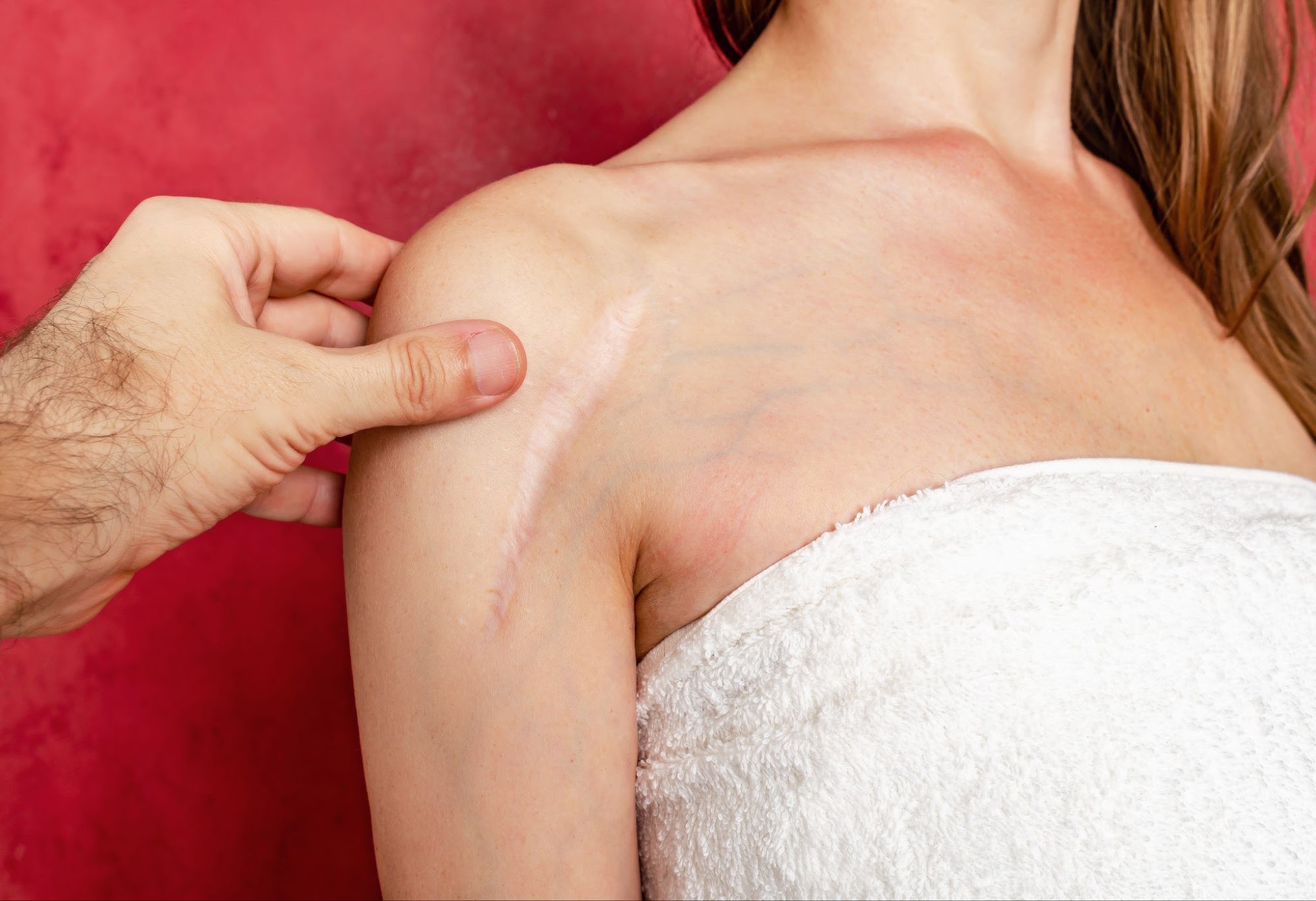
No treatment can completely erase a scar, but scar revision plastic surgery can make scars less noticeable by improving color, texture, thickness, or overall appearance. Surgery can also improve movement when scar tissue restricts mobility. Scars can also be treated with non-surgical techniques.
This guide from The Lett Center explains what scar revision is, which types of scars can be improved, available procedures, when to consider treatment, and answers frequently asked questions about cost, recovery, and how long results last.
What Is Scar Revision?
Scar revision is a surgical or non-surgical treatment that improves the appearance or function of an existing scar. Depending on the scar, treatment can help flatten raised tissue, smooth uneven texture, reduce color differences, lift a depressed scar, or release tight scar tissue that restricts movement.
The right approach depends on the scar’s type, size, location, and how long it has been present. Surgical scar revision removes or repositions scar tissue and closes the skin to create a finer scar. Non-surgical treatments improve appearance without incisions by resurfacing the skin, stimulating collagen, or adding volume beneath an indented scar.
What Types of Scars Can Be Improved?
Scar revision can treat many types of scars. The type of scar and how it has healed will influence which treatments are appropriate and how well it may respond.
Common types of scars treated with scar revision include:
- Discolored scars: Scars that are darker, lighter, or redder than surrounding skin.
- Scars with surface irregularities: Scars with an uneven texture or contour compared with the surrounding skin.
- Atrophic scars: Depressed or indented scars that sit below the surrounding skin.
- Hypertrophic scars: Thick, raised scars that remain within the borders of the original wound and may gradually flatten and soften as the scar matures.
- Keloid scars: Raised scars that extend beyond the borders of the original wound and continue growing into the surrounding skin.
- Contracture scars: Tight scars that pull the skin and underlying tissue together and may restrict movement.
A scar can have features of more than one type. For example, a surgical scar may be raised, discolored, and uneven. Treatment is tailored to the scar’s specific features.
How Can a Plastic Surgeon Make a Scar Look Better?
A qualified plastic surgeon can improve scars using surgical procedures, non-surgical treatments, or a combination of both. The recommended option depends on the scar type, what you don’t like about its appearance, and whether it restricts movement.
Scar Revision Surgery
Scar revision surgery may be appropriate for scars that are wide, poorly healed, poorly positioned, or tight enough to restrict movement. Depending on the scar, a plastic surgeon may remove scar tissue and carefully close the skin to create a finer scar, reposition the scar to follow natural skin lines more closely, or release a contracture to improve movement.
Surgery can be appropriate for many scars, but keloids require a more cautious approach because they have a high rate of returning after surgical removal. For this reason, surgery is often combined with other treatments to help reduce the risk of recurrence.
Non-Surgical Scar Treatments
Some scars can be improved without surgery using lasers, radiofrequency energy, chemical peels, or hyaluronic acid fillers.
Laser Skin Resurfacing
Laser energy removes or remodels damaged outer layers of the skin and stimulates new skin to form as it heals, helping smooth and soften certain scars. Lasers are often used for acne scars, uneven or rough scar texture, raised scars, and discoloration. Some lasers, like Vbeam, also target redness that remains after acne.
Sylfirm X Radiofrequency (RF) Microneedling
Sylfirm X uses tiny needles to deliver dual-wave radiofrequency energy into the skin. The micro-injuries and controlled heat break down scar tissue and stimulate collagen remodeling, which can help make certain scars less noticeable and improve uneven skin texture.
RF microneedling is commonly used for depressed acne scars and other textural scarring but is generally not recommended for keloids. To learn more, read “From Fine Lines to Scars: How Microneedling Addresses Various Skin Concerns.”
Chemical Peels
Chemical peels use a solution to remove controlled layers of damaged skin. As the area heals and new skin forms, scars may appear smoother and more even in tone and texture. They may treat superficial discoloration, uneven scar texture, and some depressed acne scars, but they are not typically used for deep scars, raised hypertrophic or keloid scars, or contracture scars.
Dermal Fillers
Dermal fillers add volume beneath depressed scars, lifting the indentation closer to the surrounding skin level and making it appear smoother and less noticeable. Fillers may be appropriate for small sunken scars, including certain depressed acne scars.
When Is the Right Time for Scar Revision?
Many people assume scar revision should happen as soon as a scar becomes noticeable, but scars continue to change as they heal, often becoming flatter, softer, and less noticeable over time. Therefore, mature scars are usually better candidates for surgical revision than scars that are still actively healing.
For elective surgical scar revision, plastic surgeons often recommend waiting until the scar has fully matured, which typically takes about a year and sometimes longer. The exception is when a scar interferes with movement or function. In those cases, earlier surgical revision may sometimes be appropriate. Timing for non-surgical treatments varies depending on the scar and the technique being used.
Your plastic surgeon will also consider factors such as your overall health, smoking status, expectations, and whether you have active acne or another skin condition in the treatment area when determining if scar revision is appropriate.
If you have a fresh scar and want to learn how to minimize scarring, read “What You Need To Know About Scarring and Plastic Surgery.”
Scar Revision Frequently Asked Questions
Do topical treatments reduce the appearance of scars?
Topical treatments can help improve certain scars, but effectiveness depends on the scar type. Silicone gels or sheets may help flatten and soften some raised scars and reduce redness, and skincare ingredients such as vitamin C, azelaic acid, or retinoids may help improve discoloration left behind after acne or other skin injuries. However, topical products usually can’t correct deep or indented scars, significant contractures, or scars that require surgical repositioning.
How much does it cost for a plastic surgeon to fix a scar?
Because scars vary in depth, size, and location, there is no fixed price. Cost depends largely on the technique used. For accurate pricing, schedule a consultation so the surgeon can examine your scar and determine the best approach.
Does insurance cover scar revision?
Insurance typically does not cover scar revision because it’s usually considered cosmetic. However, coverage may be available when scar revision is medically necessary, such as when a scar restricts movement or causes functional problems. If insurance does not cover your treatment, financing options are available.
Are the results of scar revision surgery permanent?
Scar revision surgery can produce long-lasting results, but the revised scar can still change with aging, sun exposure, and natural healing, and may take up to a year to fully mature and fade.
How long does it take to recover from scar revision?
Recovery depends on the treatment. After scar revision surgery, swelling, discoloration, and discomfort are common for one to two weeks, and the new scar can take up to a year to fully mature. Non-surgical treatments usually have shorter recovery times and may cause temporary redness, swelling, or sensitivity. Filler results are immediate, while improvements from lasers, chemical peels, and RF microneedling develop gradually as the skin heals.
Does sun exposure affect healing scars?
Yes. UV exposure can darken a healing scar and make it more noticeable, so sun protection is important after any scar revision treatment. Keep the area covered and apply broad-spectrum sunscreen with SPF 30 or higher once your provider says the skin has healed. To learn more, read “Daily SPF Isn’t Optional: How to Protect Your Skin Year-Round.”
Scar Revision in Middle Tennessee at The Lett Center
If a scar bothers you because of how it looks or limits movement, scar revision is worth exploring.
The Lett Center is an aesthetic and reconstructive plastic surgery practice and med spa in Middle Tennessee that offers both surgical and non-surgical options to improve the appearance of scars. Dr. Dwayne Lett is a double board-certified esthetic and reconstructive plastic surgeon and a member of the American Association of Wound Care.
He and our aesthetics team can evaluate your scar and help determine which treatment options are appropriate for you. Contact us to schedule a consultation at our office in Mt. Juliet or Lebanon, Tennessee.
Disclaimer: The information in this guide is for educational purposes only and does not constitute medical advice. Candidacy, treatment options, and expected results must be evaluated individually by a qualified medical professional.